The reversal of all expectations
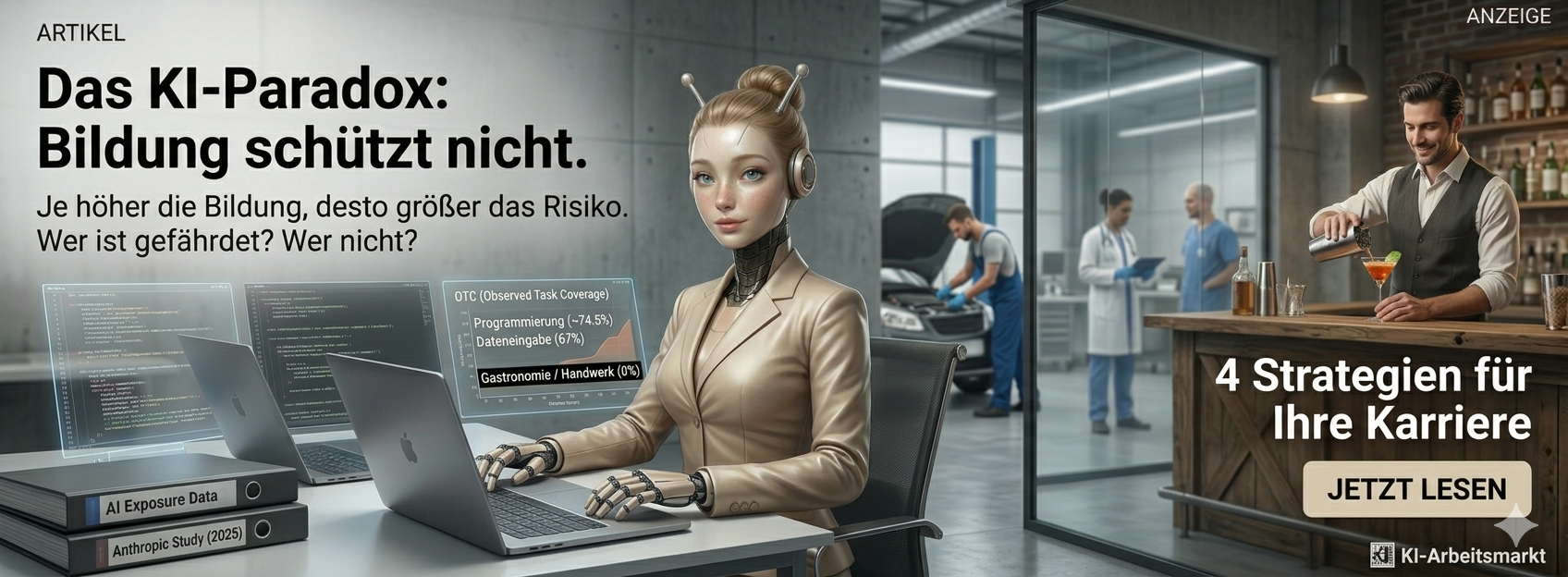
We had a clear vision of how automation would unfold: robots would take over the heavy physical labor—hauling packages, driving taxis, stocking warehouse shelves. Humans would create, design, and think. That was the promise. The reality is different. AI writes symphonies, paints pictures, and designs marketing campaigns. The plumber around the corner is safer from the revolution than the graphic designer with the MacBook. This isn't polemics—it's the status quo.Three job categories that will disappear first
White-collar on autopilot
Data entry, basic bookkeeping, spreadsheet analysis, standard contract work — all of that is eliminated first. In the US, job postings for this type of office work have already declined.👉 −25 % fewer job postings for data entry and routine work in the US
Anyone who can describe their work as "I move numbers from one Excel column to another" should understand that as a warning sign. Not as a description of the activity, but as a description of substitutability.
2. Standardized Customer Service
According to Gartner, by 2026, up to 75 percent of all customer inquiries will be handled by bots. Today, 17 million people work in call centers worldwide. Soon, a conversation with a real employee will become the exception.👉 75 % of customer inquiries will be handled by AI by 2026, according to Gartner
The formula is simple: whoever works according to a script will be replaced by the script.
3. Mechanical Content Production
Google Translate translates technical texts with over 90 percent accuracy. AI produces SEO texts faster, cheaper, and often comparable to human freelancers.👉 37 % of US companies have already implemented AI at least partially for content creation
Affected: Standard translators, rewriters, copywriters lacking in-depth content.
The actual pattern: It's not the profession that is dying – it's the shallow version of it.
Herein lies the crucial misconception in the public debate. AI doesn't eliminate professions—it eliminates the mechanical, superficial execution of them. Three examples:- A lawyer who copies contract templates from databases is replaceable. A lawyer who conducts complex negotiations, understands the psychology of the judge and client, and stabilizes their client during a crisis is irreplaceable.
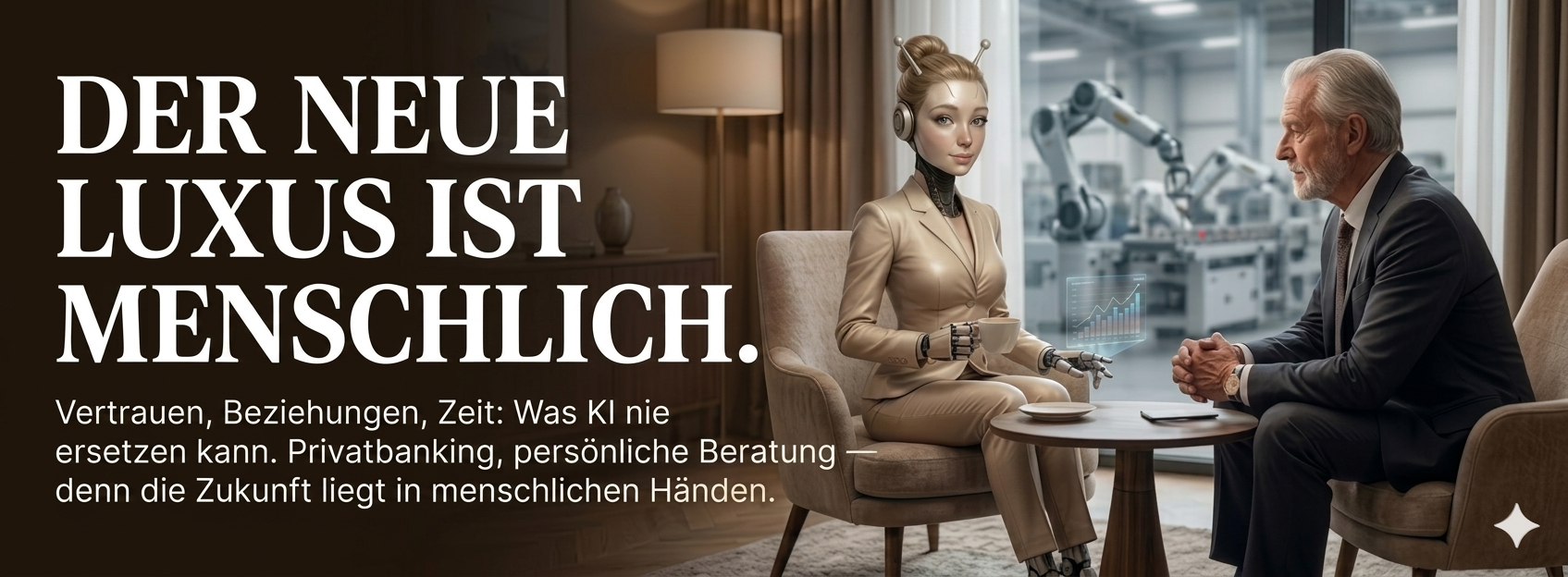
- A financial advisor who googles which stocks are currently performing well is redundant. An advisor who has access to non-public deals, knows a client's personal risk tolerance, and develops a long-term family strategy is worth their weight in gold.
- An agent who forwards links from real estate portals - what for? An agent who resolves conflicts, checks neighborhood situations, and negotiates price reductions based on personal persuasive power - that's a different league.
Who is truly safe: The surprise
Research findings show an unexpected turn: the professions least threatened by AI are those that do not require a university degree. Electricians, plumbers, construction workers, caregivers—so-called blue-collar professions—are projected to see growing demand. The reason: the real world is chaotic. An AI cannot explain that a pipeline in an old building doesn't follow the blueprints but runs through the neighbor's bedroom. Robots are still too immobile, too algorithmic, and too expensive for standard situations in skilled trades. Those who work with their hands and use their brains in the process are safe for now.The Second Zone of Protection: Empathy
Goldman Sachs concludes in its analysis that less than 5 percent of psychologists' tasks are automatable.👉 < 5 % of psychologists' tasks are automatable according to Goldman Sachs
A concrete example: An AI tutor was introduced in a school. It reliably graded tests and created study plans. Nevertheless, students continued to go to the human teacher. Why? For three words: "You can do it." Motivation can't be Googled. AI can produce encouraging phrases, but the effect remains mediocre. What's missing is the look that truly convinces.
Five Skills That Become Hard Currency
- Empathy: the ability to understand what someone is truly thinking and, above all, feeling.
- Presence — personal contact, charisma, energy.
- Ethics and Judgment — AI has no conscience.
- True creativity—humans can, in principle, create new things.
- Leadership — Inspiring people, especially in uncertain situations.
The Sixth Factor: Personal Brand
The market is like an airport in dense fog. Air traffic is increasing, the noise is getting louder, visibility is decreasing.Those who have already built trust remain visible.
The timeframe is two to three years. It's not about millions of followers — but about people who know and trust you.
Three concrete steps for tomorrow morning
Step 1: Ride the wave
- Identify routine tasks
- Integrate AI tools
- Increase efficiency
Step 2: Become a T-Shaped Expert
- Depth in an area
- Broad additional competence
- Combine skills
Step 3: Build Your Personal Brand
- Start now
- 1 post per week
- Knowledge sharing
1.5 billion people must re-skill, according to IBM
Conclusion: No war — a symbiosis
The future of work is not a story of people versus machines. It is a symbiosis.- Human: Judgment, Empathy, Trust
- AI: Speed, Scaling, Data
Winners are those who combine both